The Second Epistle of John
2 John
Truth and Love Guarded Together
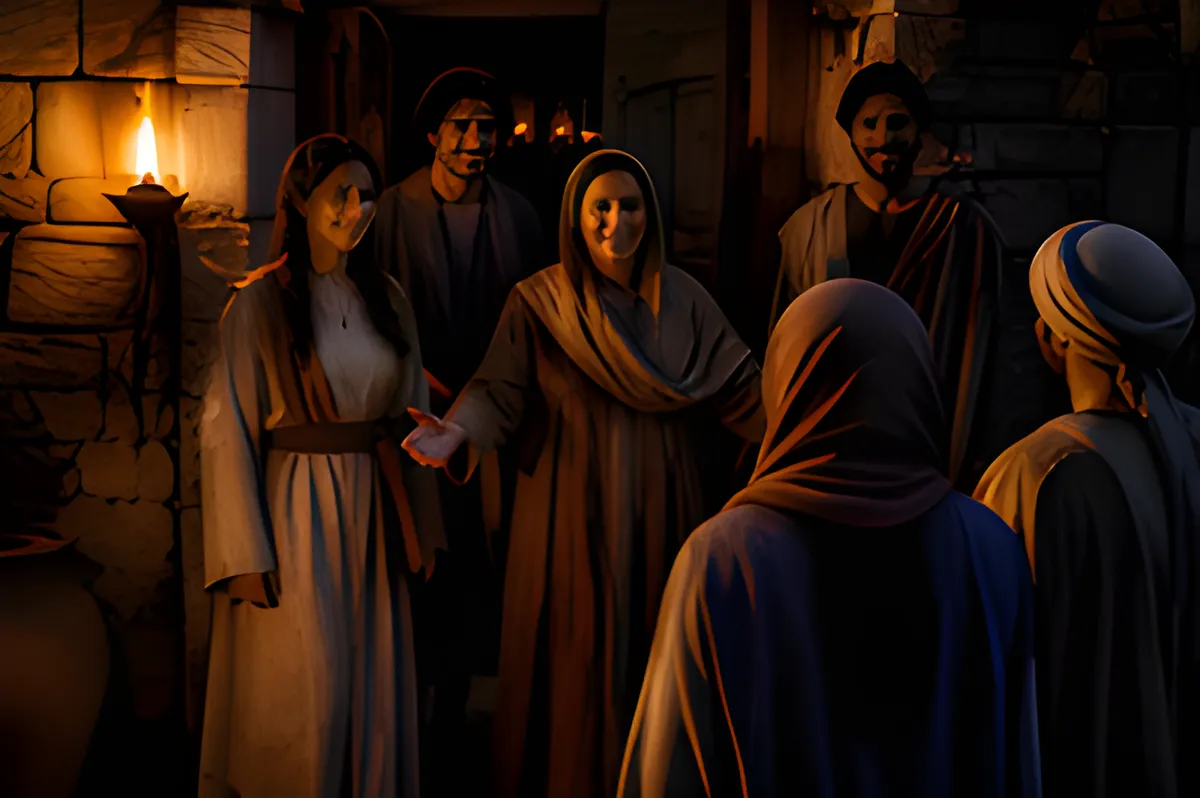
The shortest letter John ever wrote fits on a single sheet of ancient papyrus — exactly the length, as John himself notes in closing, that suited a letter meant to be followed up in person. Its recipient, “the elect lady and her children,” has been understood two ways across church history: either a literal Christian woman of some standing and her family, or — more likely, given how naturally the language reads as corporate address, and how “the children of thy elect sister” appears at the close — a local church, addressed the way Scripture elsewhere personifies a congregation as a woman and her members as her children.
Whichever reading is right, the letter’s burden is the same one that runs through 1 John, condensed to its most urgent, practical edge: false teachers denying the true incarnation of Christ are moving from town to town, depending on the hospitality believers traditionally extended to traveling teachers. John’s instruction is startling in a faith built on generous welcome: do not receive them, do not even send them on their way with a blessing. To do so is not neutral kindness; it makes the host a “partaker” in the false teaching being spread. Truth and love are not competitors in this letter — they are partners that must never be separated, each keeping the other honest.
2 John
Walking in Truth

2 John 1–3
1The elder unto the elect lady and her children, whom I love in the truth; and not I only, but also all they that have known the truth; 2For the truth’s sake, which dwelleth in us, and shall be with us for ever. 3Grace be with you, mercy, and peace, from God the Father, and from the Lord Jesus Christ, the Son of the Father, in truth and love.
John identifies himself simply as “the elder” — not claiming apostolic title, but the honored, familiar standing of an aging pastor known to his readers without need of further introduction. In the first two verses “truth” appears four times, setting the letter’s keynote before a single instruction is given. His love for this church is “in the truth,” shared by everyone who has genuinely known that same truth — love here is not a private sentiment but a bond created by shared belief in Christ.
Verse 2 makes a claim that undergirds everything to follow: this truth is not a temporary teaching subject to revision but something that “dwelleth in us, and shall be with us for ever.” That permanence is precisely why John will insist, later in the letter, on guarding it so carefully. Verse 3’s greeting — grace, mercy, and peace — adds “mercy” to the more typical apostolic greeting of grace and peace, a pastoral touch fitting a letter that will soon warn of real danger; and it closes by naming the twin themes that govern the whole short letter: “truth and love,” inseparably paired.
2 John 4–6
4I rejoiced greatly that I found of thy children walking in truth, as we have received a commandment from the Father. 5And now I beseech thee, lady, not as though I wrote a new commandment unto thee, but that which we had from the beginning, that we love one another. 6And this is love, that we walk after his commandments. This is the commandment, That, as ye have heard from the beginning, ye should walk in it.
John’s joy at finding “thy children walking in truth” is not generic pleasure at good behavior — it is the same test he applies throughout 1 John, now applied warmly to a specific, known congregation: real faith shows itself as a walk, an ongoing direction of life, not a single profession made once. Notice, too, that walking in truth is itself called “a commandment from the Father” — belief and conduct are never treated in these letters as separate categories with separate rules.
Verses 5–6 return to the “old and new” language of 1 John 2:7–8: the command to love is not new information, but John presses it again because it is easy to hear and hard to keep walking in, especially when love and doctrinal faithfulness begin to feel like they pull in opposite directions, as they will in the very next verses. Verse 6 defines love, exactly as 1 John 5:3 did, not as warm feeling but as obedience in motion: “this is love, that we walk after his commandments.” The command and the walk are one and the same thing viewed from two angles.
2 John 7–11
7For many deceivers are entered into the world, who confess not that Jesus Christ is come in the flesh. This is a deceiver and an antichrist. 8Look to yourselves, that we lose not those things which we have wrought, but that we receive a full reward. 9Whosoever transgresseth, and abideth not in the doctrine of Christ, hath not God. He that abideth in the doctrine of Christ, he hath both the Father and the Son. 10If there come any unto you, and bring not this doctrine, receive him not into your house, neither bid him God speed: 11For he that biddeth him God speed is partaker of his evil deeds.
Here is the letter’s urgent center, and the same doctrinal test named in 1 John 4:2–3 reappears almost word for word: deceivers who deny that Jesus Christ has truly come in the flesh. John calls this denial by its full, uncompromising name — a deceiver and an antichrist — with no room left for treating it as a minor variation in emphasis. Verse 9 states the stakes as starkly as anywhere in the New Testament: someone who “transgresseth” (literally, goes ahead of or beyond) the received doctrine of Christ, thinking this makes them more advanced, “hath not God” at all — however sincere or spiritually impressive the departure may appear.
Verse 10’s instruction has troubled some readers, who wonder how it fits with Christian hospitality elsewhere commanded throughout Scripture. The key is what is actually in view: not travelers in general, not people of different opinions on secondary matters, but itinerant teachers specifically bringing a false doctrine of Christ’s person into congregations, seeking the credibility and material support that a public welcome from the church would supply. To open the door to such teaching, John says, is to become a “partaker” — an active participant, not a passive bystander — in its harm. Refusing to lend Christian credibility to a false gospel is, in this specific case, the loving thing to do for everyone the false teacher might otherwise deceive.
2 John 12–13
12Having many things to write unto you, I would not write with paper and ink: but I trust to come unto you, and speak face to face, that our joy may be full. 13The children of thy elect sister greet thee. Amen.
John closes the way he began 1 John — with joy as the goal of the whole correspondence. A letter, however carefully written, is a poor substitute for presence, and John clearly prefers the fuller communication and fellowship of a face-to-face visit over “paper and ink.” There is a lesson here easily missed in an age of countless written and digital messages: even inspired, authoritative teaching is not meant to replace the personal, relational life of the church — it serves that life, and looks forward to it.
The closing greeting from “the children of thy elect sister” — most naturally read as another local congregation John is presently among — quietly reinforces the corporate reading of the letter’s opening address, and reminds the recipients that they are not isolated: they belong to a wider fellowship of churches walking, however imperfectly, in the same truth and the same love John has spent this short letter urging them never to separate.